
Table of contents
- Ways to use MatheArena Junior in the classroom
- Why using math learning apps in the classroom makes sense
- Seamless integration into lessons through cooperation with VERITAS
- Conclusion
MatheArena Junior offers versatile ways to integrate it into mathematics teaching and can be used both to introduce new topics and to consolidate and deepen them. The ways of using MatheArena Junior presented here are based on the findings of the specialist article published in 2023 in phpublico, “Using MatheArena Junior in lower secondary education: case study of a 1st-grade class” by Thomas Benesch, Verena Plank and Eva-Maria Infanger.
Ways to use MatheArena Junior in the classroom
One example of practical use is integration into station-based learning. After students have acquired basic knowledge at various stations, they work through interactive exercises in MatheArena Junior that are automatically adapted to their learning level. This ensures that every learner can work at their own pace, without being over- or under-challenged.
The math learning app also proves to be valuable support in test preparation. Students can work through tasks individually and receive direct, formative feedback. As a result, they immediately recognize which content they already have a good command of and where there is still a need for practice. This not only promotes independent learning but also relieves teachers, who can respond specifically to questions.
Another proven scenario is the introduction and consolidation of mathematical concepts. For example, students can use the app to learn about different types of angles and consolidate this knowledge through interactive tasks. The combination of direct application and playful design ensures that content is anchored more deeply in long-term memory.
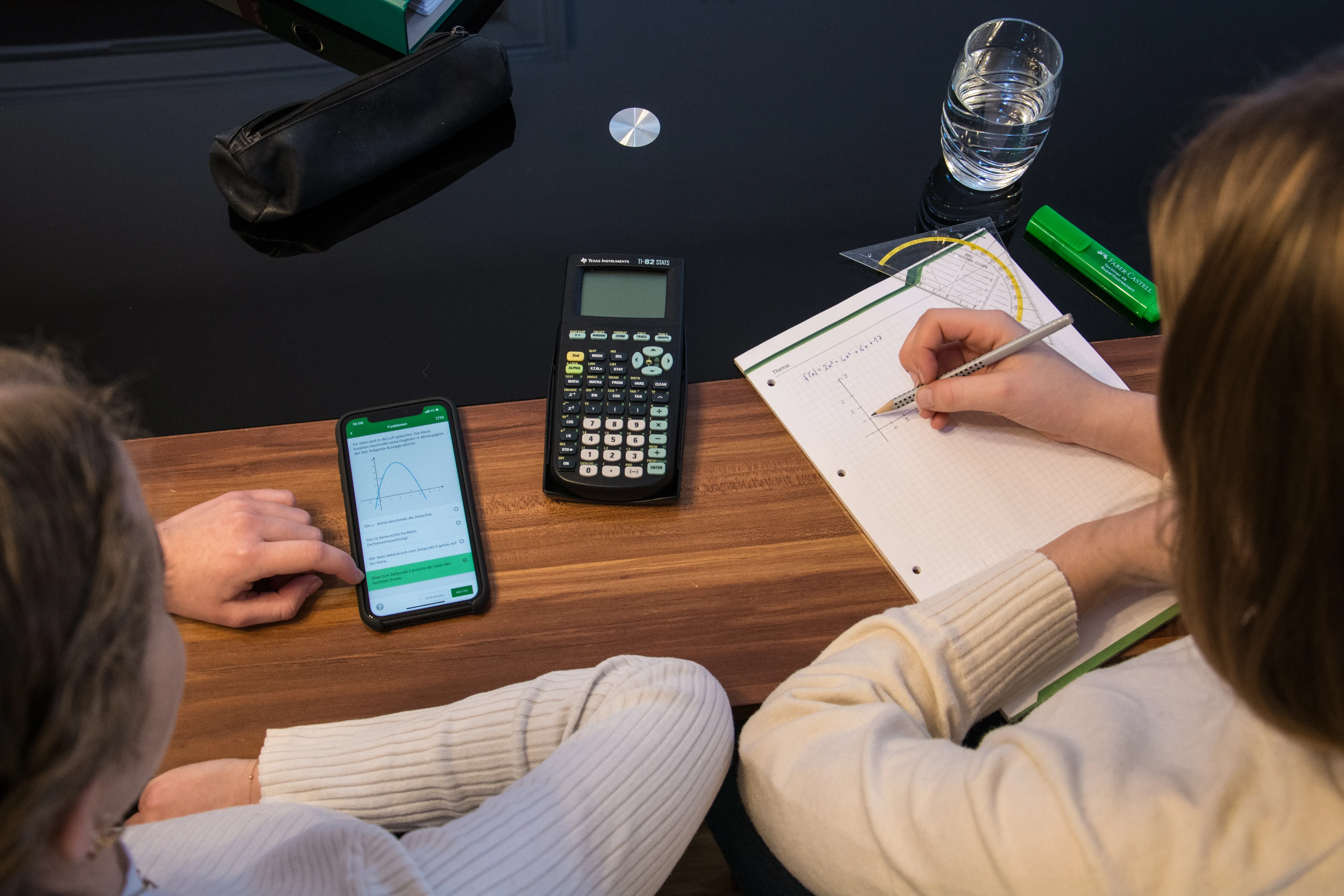
It is also interesting to observe that partner work has proven motivating when using the app. In situations where a student did not have a smartphone available, spontaneous collaboration with classmates emerged. This gave rise to collaborative learning that promoted exchange about mathematical problems and deepened understanding.
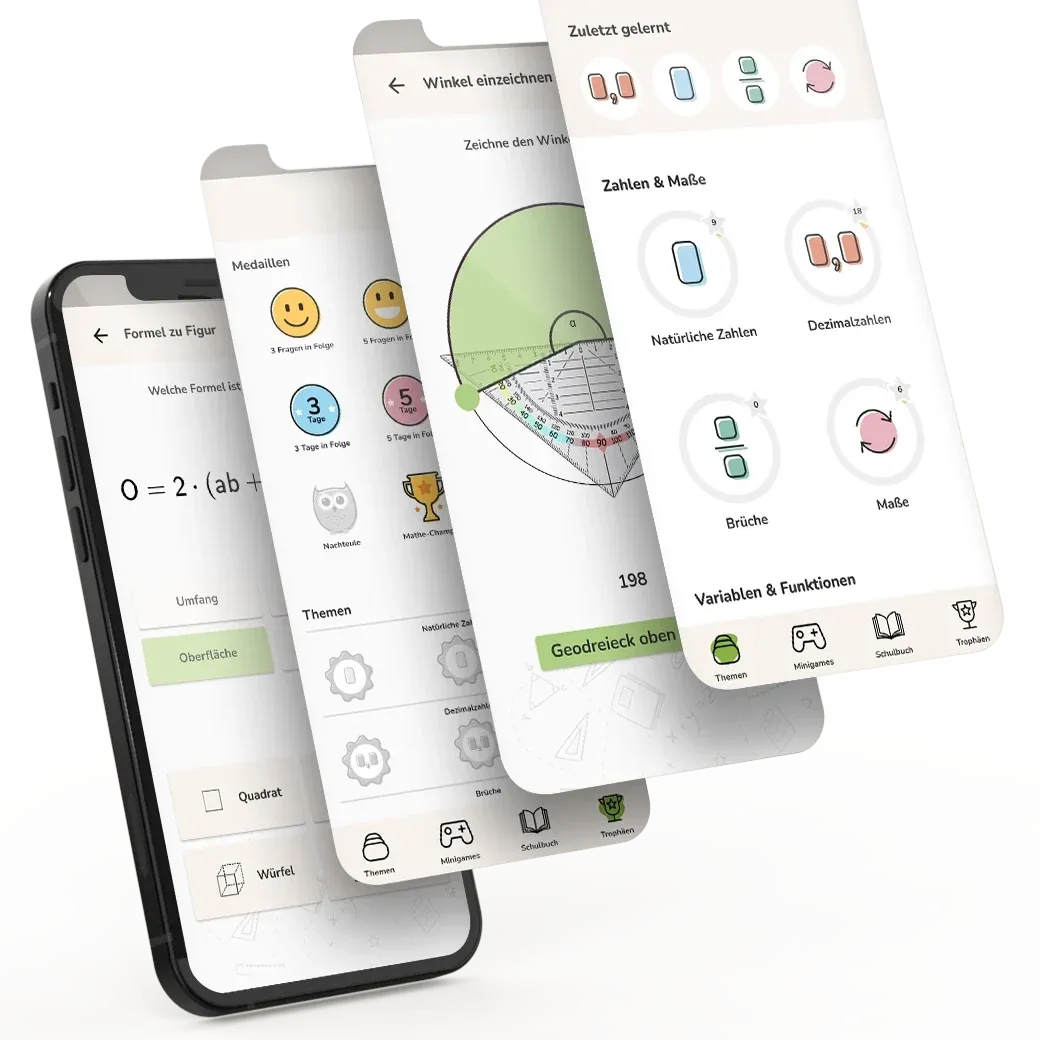
In addition to these use cases, MatheArena Junior can also be used as an individual learning companion outside of regular lessons. The ability to practice flexibly and independently of location allows students to organize their learning times in their own rhythm. This helps students experience mathematics as a subject that becomes accessible and masterable through continuous practice and understanding.
Why using math learning apps in the classroom makes sense
One of the greatest strengths of MatheArena Junior is the ability to design personalized learning paths. The math learning app automatically adjusts the level of difficulty to the individual learning level, so that both lower-performing and higher-performing students receive optimal support. Gamification elements such as reward systems and playful tasks also increase learning motivation, which has a positive effect on active engagement with mathematical content.
Flexibility is another decisive advantage when using learning apps in the classroom. Teachers can use MatheArena Junior in various teaching scenarios. Particularly valuable is the direct, formative feedback, which gives students immediate responses and allows them to track their progress in a targeted way.
Unlike many traditional digital learning platforms, this math app relies on a didactic concept that puts conceptual learning front and center. The app’s core functions are based on scientific findings from motivation research (Krapp 2005) and Cognitive Load Theory (Paas et al. 2010):
- Adaptive difficulty adjustment: The app recognizes the student’s individual learning level and automatically adjusts the level of difficulty to avoid over- or under-challenging them (Benesch 2020).
- Thematic variety: The content is aligned with the lower secondary curriculum and covers central mathematical topics.
- Learning-process-oriented design: Instead of merely querying factual knowledge, the app promotes a deeper understanding of mathematical concepts and their application (Rittle-Johnson 2017).
- Reduction of math anxiety: A safe and supportive learning environment with formative feedback helps to reduce anxiety and strengthen confidence in one’s own mathematical abilities (Dowker et al. 2016; Henschel et al. 2023).
Through these scientifically grounded functions, MatheArena Junior offers effective support for mathematics teaching and enables a sustainable improvement of learning processes.
Seamless integration into lessons through cooperation with VERITAS
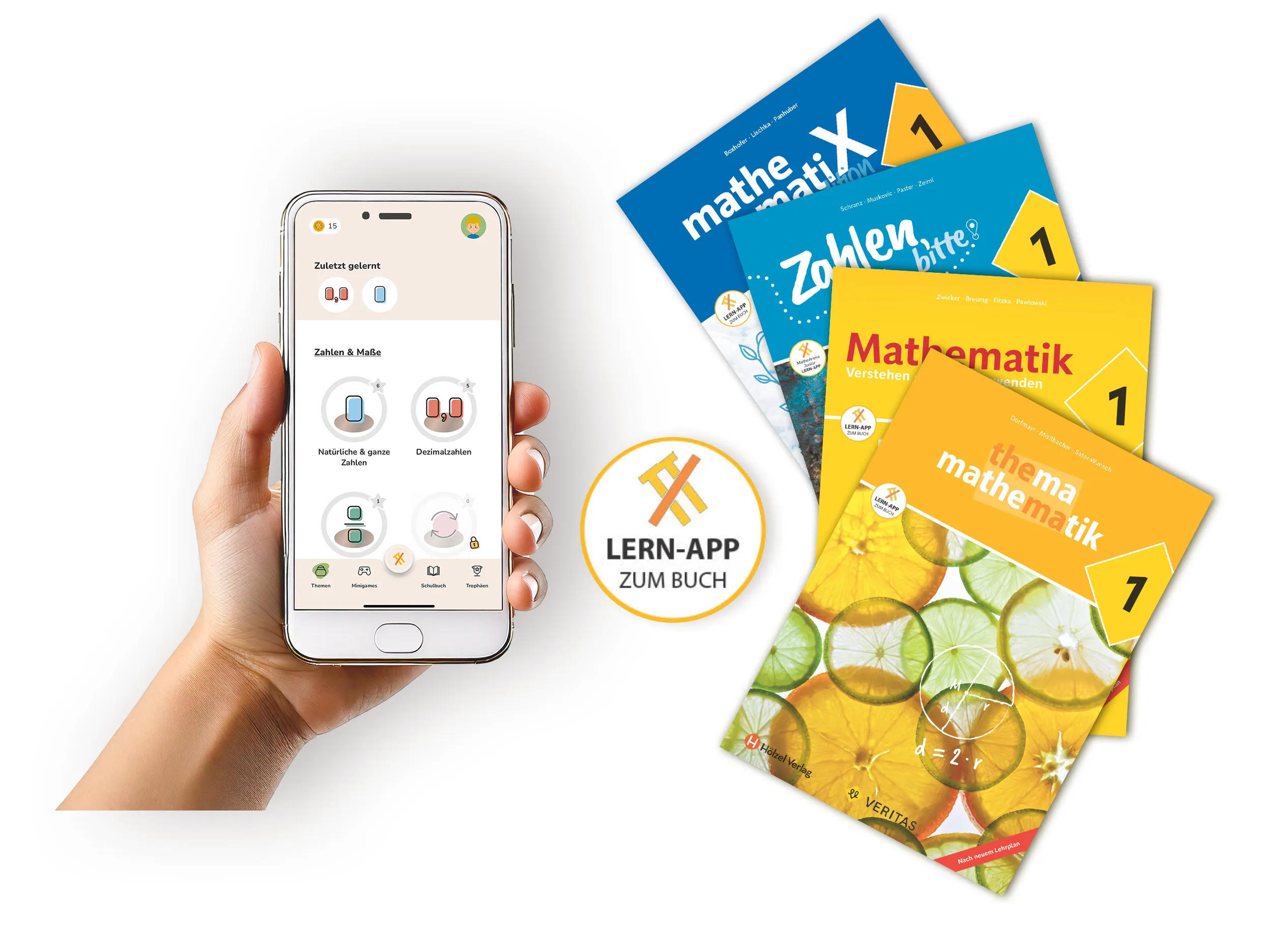
A decisive step in the further development of integrating MatheArena Junior into mathematics teaching is the cooperation with VERITAS Verlag. Since the 2023/2024 school year, our app has officially accompanied the publisher’s mathematics series for middle school and lower secondary academic school (AHS) according to the new curriculum. This close integration enables a seamless integration of our math learning app into regular mathematics teaching. This makes the math learning app an integral part of the learning process: it supplements the classic textbook with a digital, interactive component and allows for differentiated support – both in the classroom and at home.
Conclusion: math learning apps in the classroom
For teachers looking for a practical and adaptive solution for mathematics teaching, our mobile math learning app represents a valuable addition. Through flexible integration into different teaching formats, MatheArena Junior supports both individual and collaborative learning – and thus contributes to a sustainable improvement of mathematics teaching.
MatheArena Junior proves to be a didactic enrichment of mathematics teaching as a digital supplement in station-based learning, for the introduction or consolidation of mathematical content, or in individual test preparation. Positive uses also emerge in self-directed learning outside of lessons or in partner work. Thanks to adaptive exercise formats, thematic variety, direct feedback and a richly designed user interface, MatheArena Junior represents a practical math learning app that promotes learning motivation and contributes to improved performance.
Try MatheArena Junior now
References
Benesch, T. (2020). Das Fähigkeitsselbstkonzept im Bereich Mathematik in Bezug auf Lern- und Leistungsmotivation: eine quantitative Studie. Mathematik im Unterricht, 11, pp. 78–96.
Dowker, A., Sarkar, A. & Looi, C. Y. (2016). Mathematics Anxiety: What Have We Learned in 60 Years? Frontiers in Psychology, 7, pp. 508.
Henschel, S., Jansen, M. & Schneider, R. (2023). How gender stereotypes of students and significant others are related to motivational and affective outcomes in mathematics at the end of secondary school. Contemporary Educational Psychology, 73, 102161.
Krapp, A. (2005). Das Konzept der grundlegenden psychologischen Bedürfnisse. Ein Erklärungsansatz für die positiven Effekte von Wohlbefinden und intrinsischer Motivation im LehrLerngeschehen. Zeitschrift für Pädagogik, 51(5), pp. 626–641.
Paas, F., van Gog, T. & Sweller, J. (2010). Cognitive Load Theory: New Conceptualizations, Specifications, and Integrated Research Perspectives. Educational Psychology Review, 22(2), pp. 115–121.
Rittle-Johnson, B. (2017). Developing Mathematics Knowledge. Child Development Perspectives, 11(3), pp. 184–190.